Planning a trip to Europe can feel overwhelming. Dozens of countries, multiple currencies, different languages, and a maze of flight, train, and bus options can turn your dream itinerary into a stressful spreadsheet. The good news? With the right travel apps on your phone, exploring Europe becomes easier, cheaper, and a lot more enjoyable.
In this guide, you’ll discover the best travel apps for Europe in 2025, from flight and train booking tools to eSIM apps, offline maps, money and budgeting apps, language support, and safety helpers. Instead of installing 40 random apps that you’ll never open, I’ll show you a focused toolkit that actually helps you plan, save money, and stay connected on the road.
Whether you’re backpacking through hostels, city-hopping on weekend breaks, working remotely as a digital nomad, or traveling with your family, these apps will help you find cheaper tickets, avoid tourist traps, protect your data on public Wi-Fi, and stay organized from your first flight to your last train ride home.
Before we dive into the full list, take a minute to create a “Europe Travel” folder on your phone. As you read, you can add only the apps that match your travel style, so you end up with a clean, powerful setup instead of a cluttered home screen.
Table of Contents
- Why You Need Travel Apps in Europe
- Essential Pre-Trip Apps (Flights, Hotels & Itineraries)
- Best Apps for Getting Internet in Europe (eSIM & Wi-Fi)
- Navigation & Offline Maps Apps
- Public Transport, Trains & Buses
- Money, Budget & Currency Apps
- Language & Translation Apps
- Tickets, Tours & Things To Do
- Food, Dining & Local Deals
- Safety, Emergencies & Travel Insurance Helpers
- Bonus: Europe-Specific Hidden Gem Apps
- How to Combine These Apps for a Smooth Europe Trip
- Final Thoughts
Why You Need Travel Apps in Europe
Europe is one of the easiest regions in the world to explore, but it’s also one of the most complex. You can cross several countries in a single day, each with different languages, currencies, ticket systems and transport rules. Without the right tools, booking trains, finding Wi-Fi, or just locating your hotel after a long day can quickly turn from exciting to exhausting.
Travel apps help you cut through this complexity. With a few smart downloads, you can compare flights and trains in seconds, store all your bookings in one place, get reliable mobile data as soon as you land, and navigate new cities even when you’re offline. The result is less time stressing over logistics and more time actually enjoying cafés, museums and hidden streets.
They also save you real money. Apps can reveal cheaper flight dates, local bus and train options you’d never find on your own, restaurant discounts, and fair currency exchange rates. Combined with a good VPN and secure payment apps, they protect you on public Wi-Fi and reduce the risk of card blocks or nasty roaming surprises on your bill.
In the next sections, we’ll look at the best travel apps for Europe by category: flights and hotels, eSIMs and internet, navigation, public transport, money and budgeting, language tools, tickets and tours, food, safety, and a few fun extras. You don’t need them all—just pick the ones that match your travel style and build a simple “Europe toolkit” on your phone.
Essential Pre-Trip Apps (Flights, Hotels & Itineraries)
Before you land in Europe, a few smart apps can save you hundreds of euros and hours of planning time. These tools help you find cheaper flights, compare places to stay, and keep all your bookings organized in one place so you’re not digging through your inbox at the airport.
1. Skyscanner – Find Cheap Flights to & Around Europe
Skyscanner is one of the best flight search engines for flexible European trips. It compares hundreds of airlines and online travel agencies so you can quickly see which days, routes and airports give you the lowest prices.
- Use the “Everywhere” search to find the cheapest country to fly into in Europe.
- Check the whole month view to spot cheaper days to depart and return.
- Set price alerts so the app notifies you when fares drop on your route.
Skyscanner is ideal if your travel dates are flexible or you’re open to different starting points, like flying into Milan instead of Rome or Brussels instead of Paris to save money.
2. Google Flights – Fast Flight Search & Price Trends
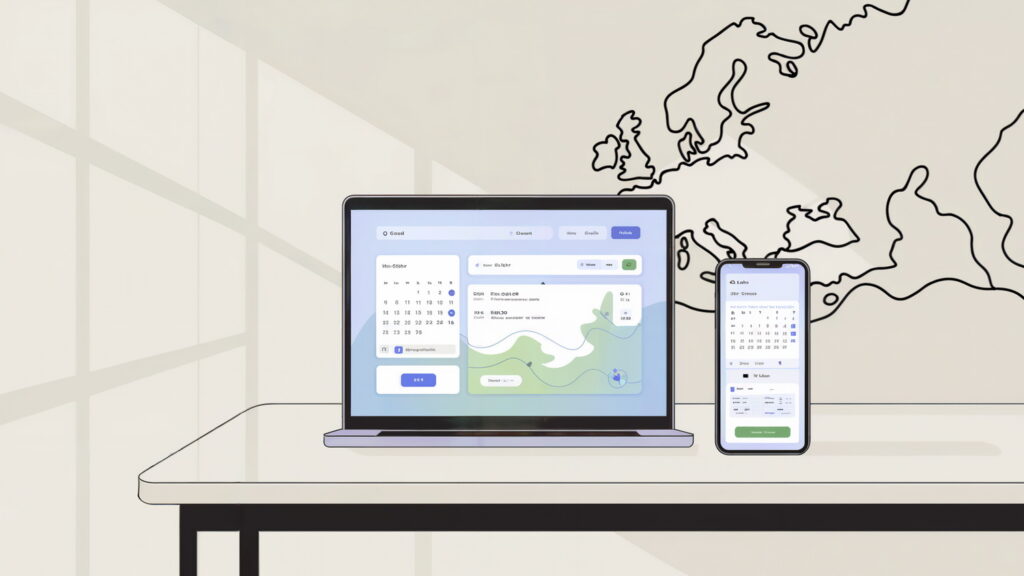
Google Flights is perfect when you want a fast overview of airlines, prices and date combinations. It’s not a booking app, but it’s excellent for spotting trends and deciding which dates and routes make the most sense for your budget.
- See price calendars and graphs that highlight the cheapest days to fly.
- Filter by airlines, bags and number of stops in just a few taps.
- Use it together with Skyscanner to double-check that you’re getting a good deal.
Once you’ve found the best dates and routes on Google Flights, you can book directly with the airline or compare deals in other apps.
3. Booking.com, Hotels.com & Hostelworld – Find the Right Place to Stay
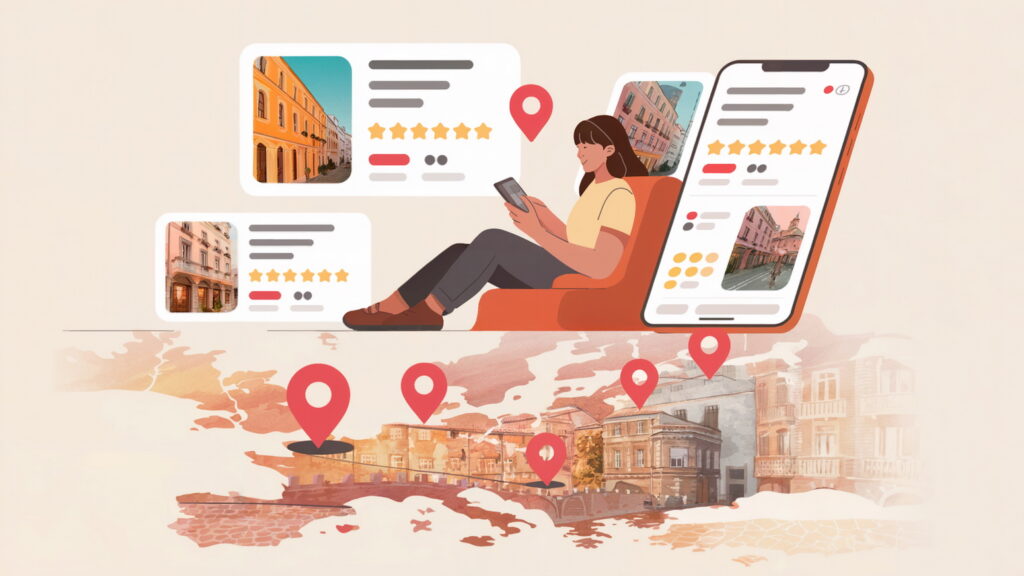
For most travelers, Booking.com or Hotels.com will cover almost every type of accommodation in Europe: hotels, apartments, guesthouses and bed & breakfasts. If you’re on a stricter budget or want a social vibe, add Hostelworld for dorm beds and party hostels.
- Use the map view to stay near old towns, train stations or metro lines.
- Filter by free cancellation so you can keep your plans flexible.
- Read recent reviews and sort by “Top Reviewed” to avoid noisy or outdated places.
These apps also make it easy to store all your booking details in one place, so your hotel name, address and check-in time are just a tap away when you arrive.
4. TripIt & Wanderlog – Organize Your Entire Itinerary
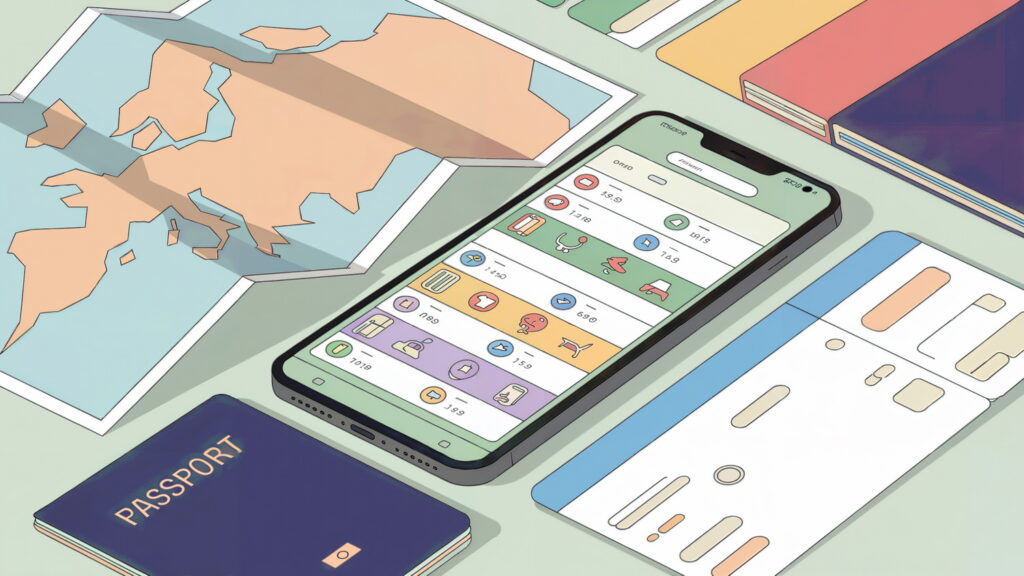
If you’ve ever scrolled through dozens of emails trying to find the right booking code at check-in, apps like TripIt and Wanderlog will feel life-changing. They turn your flights, hotels, train tickets and tours into a simple day-by-day timeline.
- TripIt can automatically scan your inbox and build an itinerary from your confirmation emails.
- Wanderlog is great for planning road trips, adding sights on a map and sharing plans with friends.
- Both make it easy to see your whole trip at a glance, including times, addresses and booking numbers.
Instead of juggling separate emails, PDFs and screenshots, you keep everything inside one clean app that works even when you’re offline or tired after a late-night flight.
Best Apps for Getting Internet in Europe (eSIM & Wi-Fi)
Roaming with your home SIM in Europe can get very expensive, especially if you stream, navigate, and upload photos all day. Instead, use travel eSIM apps and smart Wi-Fi tools to stay connected for a fraction of the cost. These apps give you data as soon as you land, without hunting for a local SIM card at the airport.
5. Holafly – Unlimited Data eSIM for Europe

Holafly is a popular eSIM provider that lets you get mobile data in Europe without swapping your physical SIM card. You buy a digital plan in the app or on their website, scan a QR code, and your phone connects to local networks as soon as you arrive.
- Unlimited data plans in many European destinations, ideal for heavy users.
- No physical SIM – keep your home number active for calls and SMS codes.
- Perfect for multi-country trips where you cross several borders in one journey.
If you don’t want to waste time in phone shops on day one of your trip, Holafly is a simple “set it up before you fly” solution so you land in Europe already connected.
6. Airalo & Saily – Flexible Local and Regional eSIMs
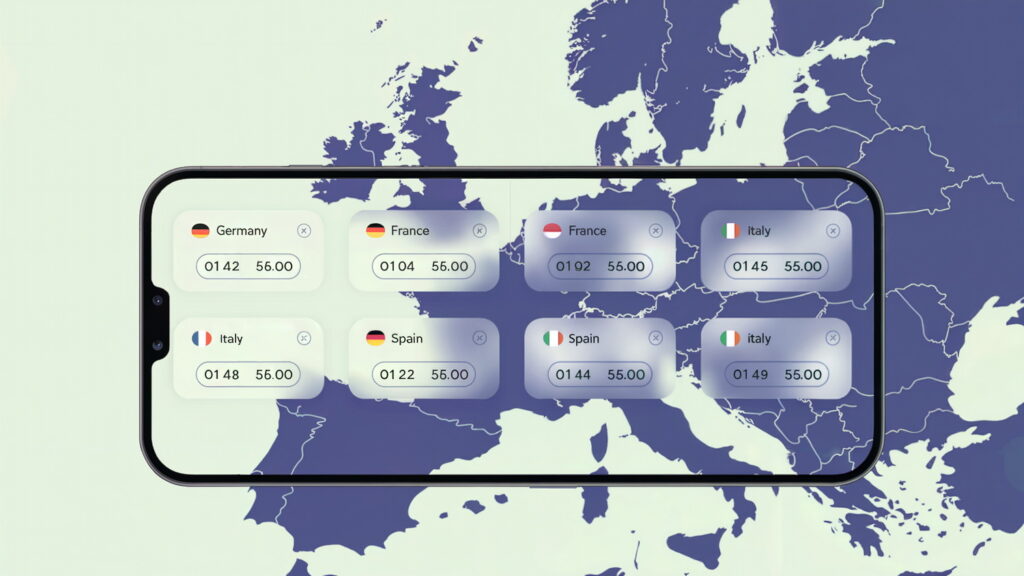
Apps like Airalo and Saily offer local and regional eSIMs with different data amounts and durations. They’re great if you want more control over how much data you buy or you only need a smaller package for a short trip.
- Choose between country-specific or Europe-wide eSIM plans.
- Buy small bundles for weekend trips or bigger plans for longer stays.
- Useful as a backup option if your main eSIM has weak coverage in a specific region.
For advanced users who like to compare prices and coverage, Airalo and Saily are excellent complements or alternatives to unlimited providers like Holafly.
7. WiFi Map & Similar Apps – Find Free Wi-Fi on the Go

If you’re really trying to save money on data, apps like WiFi Map crowdsource locations of public and semi-public hotspots around you. They’re handy when you just need to download offline maps, check email, or message family without burning mobile data.
- Discover cafés, libraries and public spaces with Wi-Fi nearby.
- Save your favorite hotspots in case you return to the same area.
- Combine with a VPN app to stay safer on open networks.
Use these apps for quick check-ins or downloads, but avoid doing sensitive tasks like online banking on unknown networks, even if they’re password protected.
8. NordVPN or Similar – Protect Yourself on Public Wi-Fi

Whenever you connect to airport, hotel or café Wi-Fi, a VPN (Virtual Private Network) is essential. Services like NordVPN encrypt your connection, making it much harder for anyone on the same network to snoop on your data.
- Secure your logins and personal data on public and semi-public Wi-Fi.
- Access your home country streaming services while you’re abroad.
- Reduce the risk of hackers and malicious hotspots on the road.
For a Europe trip where you’ll constantly jump between hotel, café and airport networks, a reliable VPN app is one of the simplest ways to protect your privacy.
Navigation & Offline Maps Apps
Getting pleasantly lost in a European old town is part of the fun. But when it’s late, raining, or you’re dragging a suitcase over cobblestones, you’ll be glad you have reliable navigation on your phone. These map apps help you find your hotel, catch the right tram, and discover hidden cafés and viewpoints without wasting data or time.
9. Google Maps – The Essential All-Round Navigator

Google Maps is still the default navigation app for most travelers in Europe, and for good reason. It covers thousands of cities and towns, with detailed walking directions, driving routes, and public transport options in many countries.
- Download offline maps for each city or region before you arrive so you can navigate without using mobile data.
- Save your hotel, train station and key sights as Favorites to access them in a couple of taps.
- Create custom Lists for each destination (Day 1 in Rome, Weekend in Paris, etc.) to organize your must-see places.
For many trips, Google Maps alone will cover 80% of your navigation needs, especially in major European cities with good data coverage.
10. Maps.me – Powerful Offline Maps for Cities & Trails

When you’re heading into the countryside, mountains or smaller towns, Maps.me becomes incredibly useful. It lets you download detailed offline maps that include hiking trails, viewpoints, parks and tiny side streets that sometimes don’t appear clearly in other apps.
- Download entire countries or regions to use fully offline.
- See walking paths and hiking trails that are perfect for nature days.
- Bookmark spots like viewpoints, waterfalls, remote beaches or campsites.
If you plan to explore national parks, coastal paths or rural villages, having Maps.me on your phone is a simple way to avoid wrong turns and dead ends.
11. Citymapper – Smart Public Transport in Big Cities
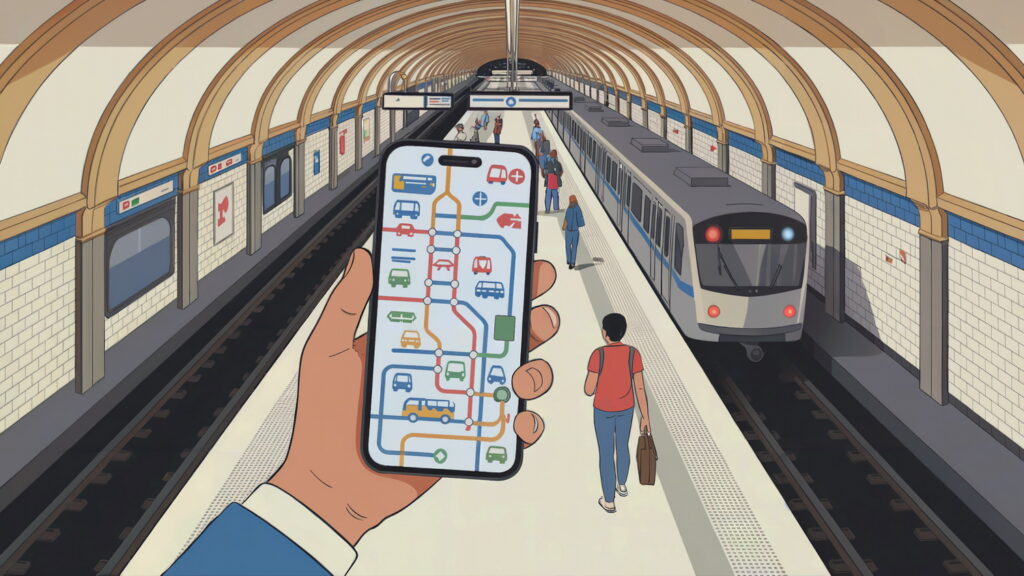
In major European cities such as London, Paris, Berlin, Rome and Barcelona, Citymapper often does a better job than standard map apps for public transport. It combines metros, buses, trams, suburban trains and even bikes or scooters into one clear route.
- See live departure times and delays for many metro and bus lines.
- Compare routes by time, cost and number of changes.
- Get step-by-step directions, including which metro carriage to board for the fastest transfer.
Citymapper is perfect if you’re new to a big city and want to move around like a local without constantly checking maps or getting stuck on the wrong platform.
Public Transport, Trains & Buses
One of the biggest perks of traveling in Europe is how easy it is to move between cities and countries without renting a car. Trains, buses and budget airlines connect almost every corner of the continent. The right apps help you compare routes and prices in seconds, book tickets on your phone, and avoid long queues at station machines.
12. Omio – Compare Trains, Buses & Flights in One App
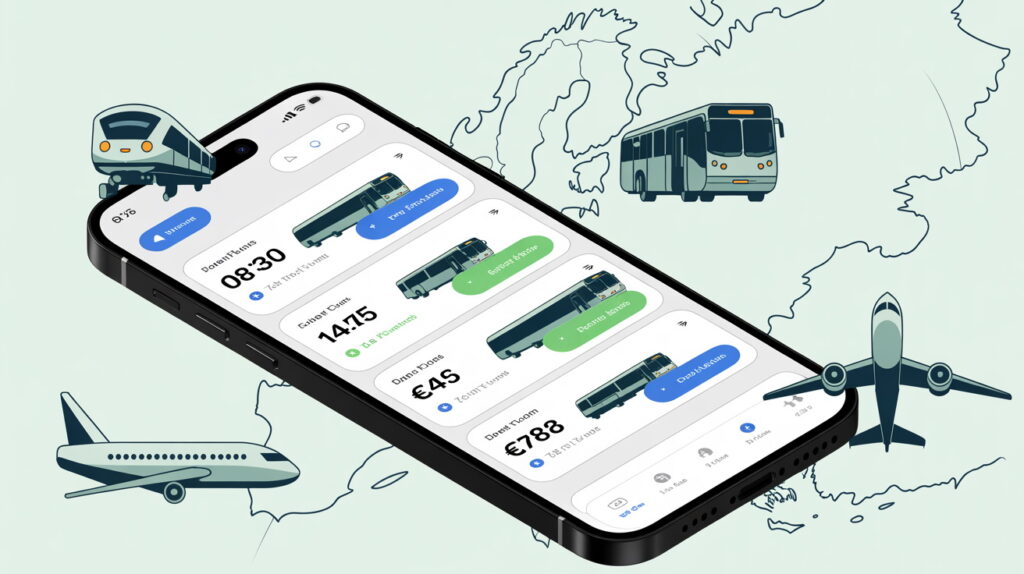
Omio is like a search engine for getting around Europe. Instead of checking separate websites for trains, buses and flights, you can compare them all in one place and book the option that fits your budget and schedule.
- Search trains, buses and some flights for popular and lesser-known routes.
- See journey times, prices and transfer details side by side.
- Store your tickets in the app so you don’t have to print anything.
Omio is especially useful for cross-border trips where you’re not sure if a train, bus or cheap flight makes the most sense.
13. Trainline & Local Rail Apps – Best Fares on National Networks
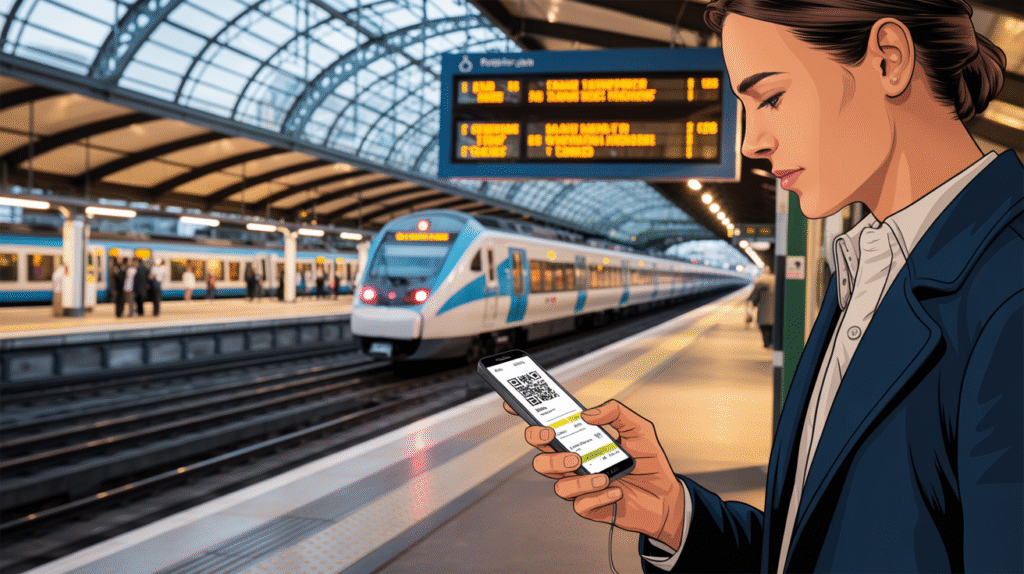
While Omio is great for comparisons, apps like Trainline and the official rail apps (such as DB Navigator in Germany, SNCF in France, Trenitalia in Italy, Renfe in Spain) often give you deeper access to national train networks and special fares.
- Check timetable updates, delays and platform information in real time.
- Find regional passes and discounts that sometimes don’t appear on third-party sites.
- Download mobile tickets and QR codes directly into the app for easy boarding.
Before you book a longer or more expensive journey, it’s worth checking both Trainline and the local railway app to see which one offers the better price or flexibility.
14. FlixBus – Cheap Long-Distance Buses Across Europe
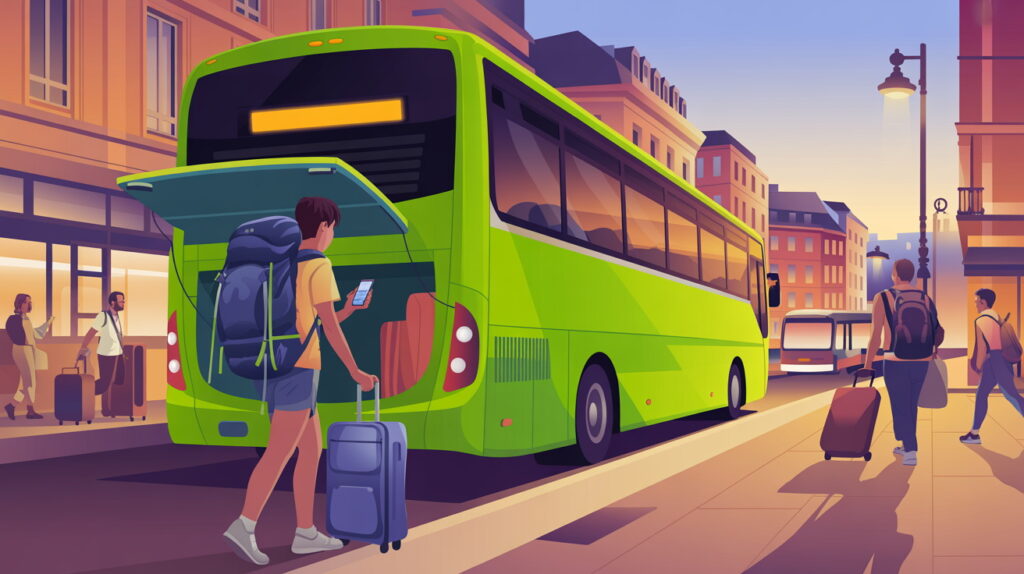
If you’re traveling on a tighter budget, FlixBus is one of the cheapest ways to move between European cities and even countries. The buses are usually comfortable, with Wi-Fi and power outlets on many routes, and the network covers thousands of destinations.
- Find very low fares on popular routes, especially booked in advance.
- Use the app to see departure points, track your bus and show your mobile ticket.
- Great for overnight journeys, saving both travel time and a night of accommodation.
FlixBus is ideal for backpackers, students and flexible travelers who don’t mind a longer journey if it means keeping costs down.
15. Local Transit Apps – Tickets & Live Updates in Each City

Almost every major European city has its own public transport app, and they’re often the best way to buy tickets and check live information. Examples include BVG in Berlin, RATP in Paris, TMB in Barcelona, and ATM in Milan.
- Buy single tickets, day passes or tourist cards directly on your phone.
- See live departure times for buses, trams and metros.
- Get alerts about disruptions, strikes or route changes before you head out.
Download the local transit app for each major city on your route and set it up before you arrive. It’s one of the easiest ways to move around like a local from day one.
Money, Budget & Currency Apps
Between different currencies, foreign transaction fees and surprise ATM charges, it’s easy to overspend in Europe without noticing. Money and budgeting apps help you track what you’re really paying, avoid bad exchange rates, and split costs fairly when you’re traveling with others.
16. Wise – Low-Fee Multi-Currency Card
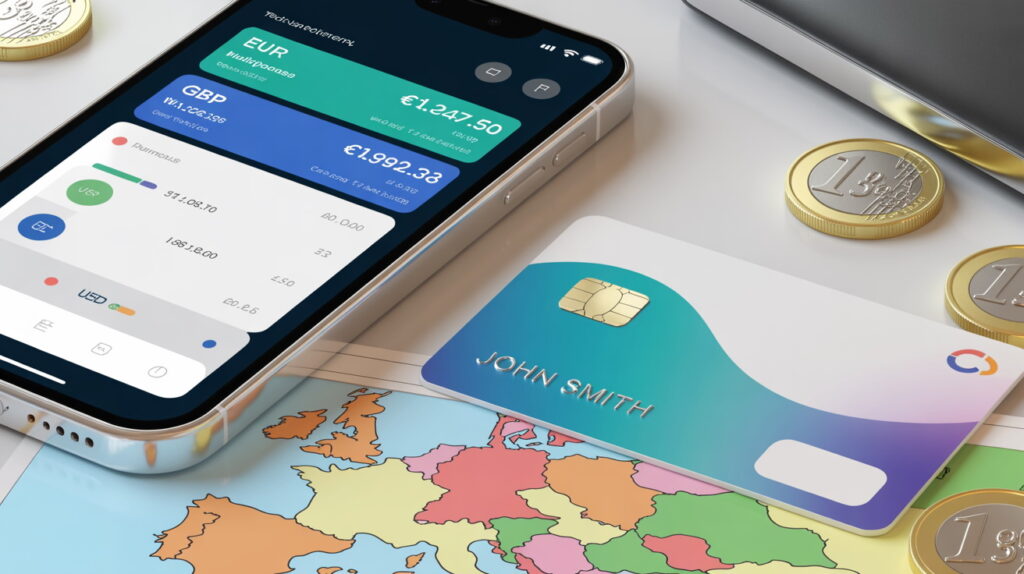
Wise is a popular option for travelers who want transparent exchange rates and low fees. You can hold money in multiple currencies, convert at near mid-market rates, and pay with a physical or virtual card almost anywhere in Europe.
- Store and convert money in dozens of currencies with clear, upfront fees.
- Use the Wise card to pay in shops, restaurants and online with better rates than many traditional banks.
- Send money to local bank accounts if you need to pay rent or tours directly.
Wise is especially useful if you visit several countries on one trip or if you get paid in one currency and spend in another.
17. Revolut & N26 – Mobile Banks for Travelers
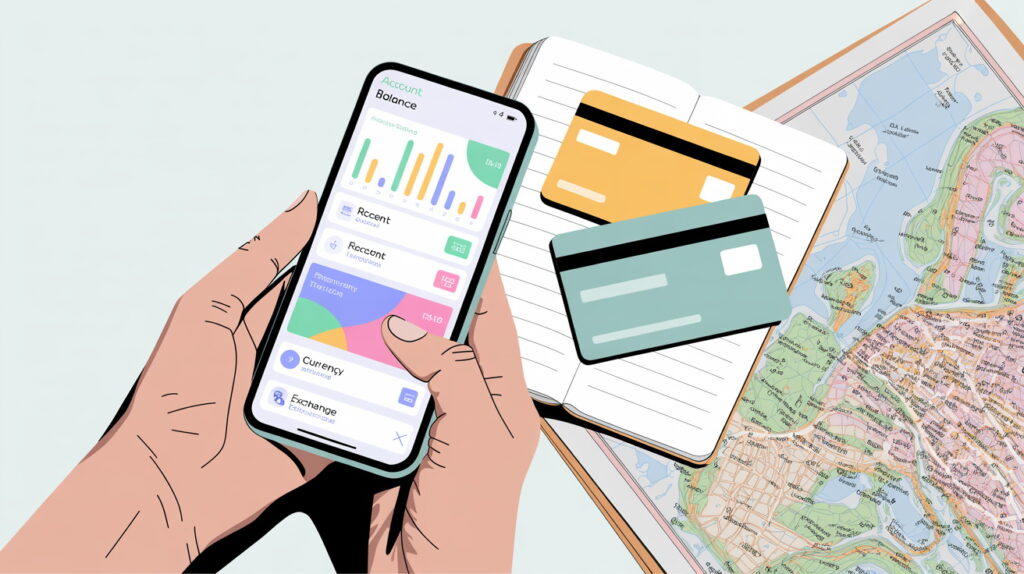
Digital banks like Revolut and N26 are designed with travelers and frequent card users in mind. They combine app-based banking with budgeting tools, low-fee currency exchanges and useful extras like virtual cards.
- Get instant notifications for every card transaction so you always know what you’re spending.
- Hold balances in multiple currencies and convert at competitive rates.
- Use virtual cards for safer online bookings and subscriptions while you travel.
Check the conditions for your country, but for many travelers these apps are a great way to separate “travel money” from your main bank account and keep better control over your budget.
18. XE Currency & Similar Converters – Know What You’re Paying
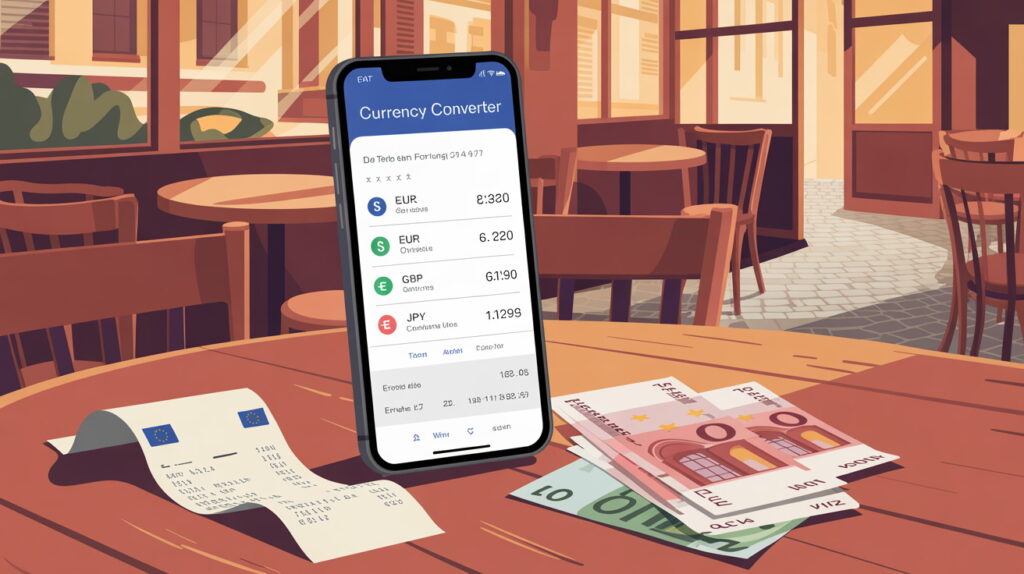
When you’re switching between euros, pounds, Swiss francs, kroner and zloty, it’s hard to know what something really costs in your home currency. Apps like XE Currency or My Currency Converter give you quick, accurate exchange rates on your phone.
- Convert prices in seconds so you don’t overpay just because the number looks small.
- Save your most-used currencies for one-tap comparison.
- See how much you’re really spending on hotels, tours and restaurant meals.
Before you accept a dynamic currency conversion (like paying in your home currency on a card machine), check the rate in your converter app – it’s often cheaper to pay in the local currency instead.
19. Splitwise – Share Costs with Friends Fairly

When you’re traveling with friends, couples or family, keeping track of who paid for what can get messy fast. Splitwise makes it simple: you add expenses as you go, choose who was involved, and the app calculates how to settle up at the end.
- Track group expenses like accommodation, car rentals, groceries and tours.
- Support for multiple currencies if you cross borders during your trip.
- Clear summary at the end of the trip showing who owes who, and how much.
Instead of awkward math at the airport, you just open the app and settle the final balances with a bank transfer or payment app.
Language & Translation Apps
English will get you surprisingly far in Europe, especially in big cities and tourist areas. But as soon as you step into smaller towns, local cafés or family-run guesthouses, a few words in the local language make a huge difference. These language and translation apps help you read menus, understand signs and be polite, even if you only had a few weeks to prepare.
20. Google Translate – Instant Text, Voice & Camera Translation
Google Translate is the quickest way to bridge language gaps on the road. You can translate text, have conversations in two languages and even point your camera at menus, signs or tickets to see instant translations on your screen.
- Download languages offline so you can still translate without mobile data.
- Use camera mode to read menus, notice boards and train information in seconds.
- Try the conversation mode to take turns speaking and translating with locals.
It’s not perfect, but it’s good enough to order food, check you’ve bought the right ticket and understand basic instructions in most European countries.
21. Duolingo & Babbel – Learn the Basics Before You Go

If you have a bit of time before your trip, apps like Duolingo and Babbel help you learn the basics of local languages in a fun, structured way. Even just a handful of phrases can completely change your experience with locals.
- Practice greetings, numbers, directions and food vocabulary in short daily sessions.
- Download lessons for offline practice during commutes or flights.
- Focus on one or two languages you’ll use most, like Spanish, French, Italian or German.
You’ll still use translation apps on the road, but starting with some basic phrases makes interactions more relaxed and shows respect for the local culture.
Tickets, Tours & Things To Do
Attractions, day trips and local experiences are often the highlights of a Europe trip. The right apps help you skip long ticket lines, find trustworthy local guides and discover activities you might never stumble upon on your own. They’re also a great place to compare prices and reviews before spending your travel budget.
22. GetYourGuide – Tours & Skip-the-Line Tickets

GetYourGuide is one of the biggest platforms for tours and activities in Europe. You can book everything from classic walking tours and museum tickets to day trips, boat cruises and unique experiences hosted by local guides.
- Find skip-the-line tickets for popular attractions that usually have long queues.
- Filter by rating, duration and price to match your schedule and budget.
- Read verified reviews and photos from other travelers before you book.
GetYourGuide is especially useful in peak seasons when on-the-spot tickets can sell out or mean waiting in line for hours.
23. Viator – Huge Catalogue of Activities Across Europe
Viator, owned by TripAdvisor, offers a similarly huge range of tours, attractions and activities across Europe. It’s a good idea to check both Viator and GetYourGuide, as one may have better prices, different time slots or slightly different tour options in each city.
- Browse thousands of experiences, from food tours to adventure activities.
- See clear cancellation policies and what’s included in each tour.
- Use reviews and photo galleries to choose high-quality operators.
If you already use TripAdvisor to research destinations, Viator fits smoothly into your planning flow for booking the actual experiences.
24. Headout & Tiqets – Last-Minute Tickets & Attractions

Apps like Headout and Tiqets specialize in tickets for attractions, shows and experiences, often with same-day or next-day availability. They’re great when you arrive in a city with loose plans and want to see what’s available right now.
- Book last-minute entry to museums, viewpoints and special exhibitions.
- Find evening activities such as shows, cruises and performances.
- Store your tickets in the app for easy scanning at the entrance.
Check these apps on days when the weather changes or you suddenly have free time — they’re perfect for filling gaps in your itinerary.
25. Free Walking Tour Platforms – Budget-Friendly Local Insights

Free walking tour platforms and apps connect you with local guides who show you their city in exchange for tips. Instead of paying a fixed ticket price, you’re free to pay what you feel the tour was worth. This makes them budget-friendly and often more personal than big group tours.
- Search for free tours in major European cities like Lisbon, Prague or Budapest.
- Choose tours by theme (history, street art, food, alternative neighborhoods).
- Read reviews to find engaging guides who match your interests.
Joining a free walking tour on your first or second day in a new city is a great way to get oriented, hear local stories and collect practical tips for the rest of your stay.
Food, Dining & Local Deals
Trying local food is one of the best parts of any Europe trip, but it’s also where budgets can quietly disappear. Restaurant and food apps help you find genuinely good places to eat, avoid tourist traps and even score big discounts or cheap surprise meals when cafés are closing for the day.
26. Google Maps, TripAdvisor & TheFork – Find & Reserve Great Places to Eat

For most travelers, a combination of Google Maps, TripAdvisor and TheFork covers almost everything you need for finding restaurants and cafés in Europe. Google Maps and TripAdvisor are excellent for reviews and photos, while TheFork focuses on reservations and discounts in many cities.
- Use Google Maps to search for restaurants by rating, price range and distance.
- Check TripAdvisor for more detailed reviews, traveler photos and rankings.
- Use TheFork to book tables and access special offers or percentage discounts where available.
Look for places with consistently high ratings (around 4.3+), plenty of recent reviews and real food photos — these are usually safer bets than the busiest spots on the main tourist street.
27. Too Good To Go – Cheap Surprise Meals & Anti-Food Waste
Too Good To Go is a fantastic app if you want to save money and reduce food waste at the same time. Cafés, bakeries and restaurants sell their unsold food at the end of the day in “surprise bags” for a fraction of the original price.
- Find heavily discounted surprise bags near your accommodation.
- Pick up baked goods, meals or snacks at specific time slots chosen by the shop.
- Great for budget dinners or breakfasts in big European cities.
You won’t know exactly what you’ll get, but that’s part of the fun — and it’s an easy way to try local food without paying full price.
28. HappyCow – Vegetarian & Vegan-Friendly Spots

For vegetarians and vegans, finding good options in a new city can be a challenge. HappyCow focuses specifically on plant-based eating and helps you quickly locate vegetarian, vegan and veg-friendly restaurants and shops around you.
- Filter places by vegan, vegetarian or veg-friendly categories.
- Read reviews from other plant-based travelers who share honest feedback and tips.
- Discover hidden gems beyond the main tourist streets.
If food is a big part of your travel experience and you prefer plant-based choices, HappyCow is one of the most important apps to have on your phone.
Safety, Emergencies & Travel Insurance Helpers
Most Europe trips are smooth and problem-free, but it’s still smart to prepare for delays, lost bags or health issues. A few simple apps make it much easier to handle emergencies, contact the right people quickly and access your important documents when you really need them.
29. Emergency Number & SOS Apps – Get Help Fast
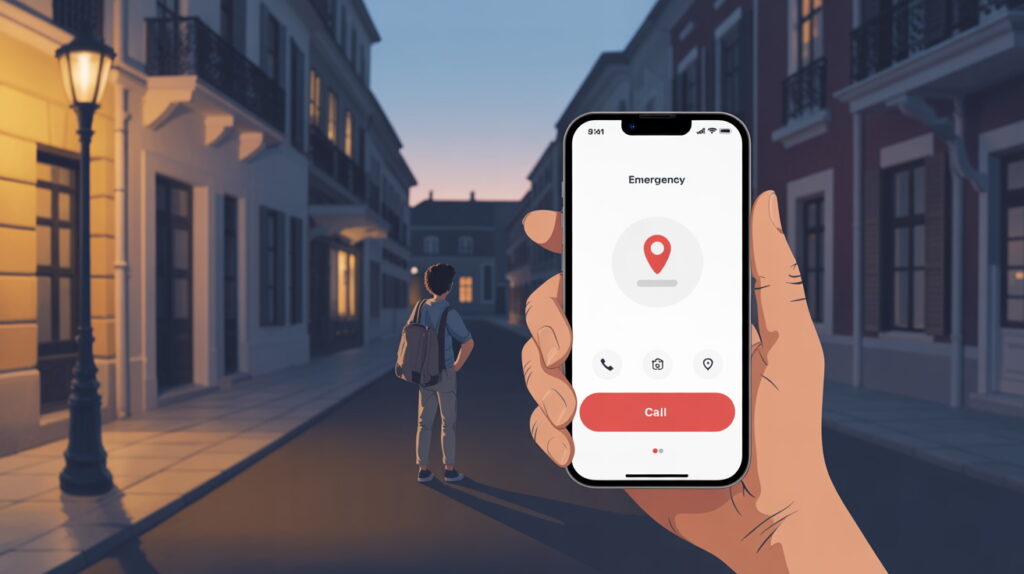
In most EU countries, 112 is the general emergency number for police, ambulance and fire. Still, having an emergency number or SOS app on your phone is helpful because it can show you the correct numbers for each country and sometimes share your location with responders.
- See the correct emergency numbers for the country you’re currently in.
- Store personal emergency contacts for quick access.
- Some apps can help share your GPS location or medical info in an emergency.
You may never need it, but setting up an SOS app takes just a few minutes and can give you extra peace of mind while traveling.
30. Travel Insurance App – Policies, Claims & Support

If you’ve bought travel insurance (which is highly recommended for Europe trips), make sure you download your insurer’s official app. This is often the fastest way to contact support, check what’s covered and start a claim if something goes wrong.
- Access your policy details and emergency assistance numbers offline.
- Start and track claims directly in the app if you need refunds or medical help.
- Upload photos of receipts, reports and documents while you’re still on the trip.
Instead of hunting through email for PDFs and phone numbers when you’re stressed, you just open the app and follow the steps.
31. Cloud Backup Apps – Keep Copies of Important Documents

Apps like Google Drive, Dropbox or iCloud Drive aren’t travel-specific, but they’re crucial for keeping digital copies of your most important documents. If your wallet, phone or bag goes missing, having backups in the cloud can save a lot of time and stress.
- Store scans or photos of your passport, ID card and driving licence.
- Upload tickets, reservations and insurance documents so they’re easy to find.
- Sync across devices so you can access them from any phone or computer.
Just make sure your account is protected with a strong password and two-factor authentication, and avoid storing sensitive information in plain text.
Bonus: Europe-Specific Hidden Gem Apps
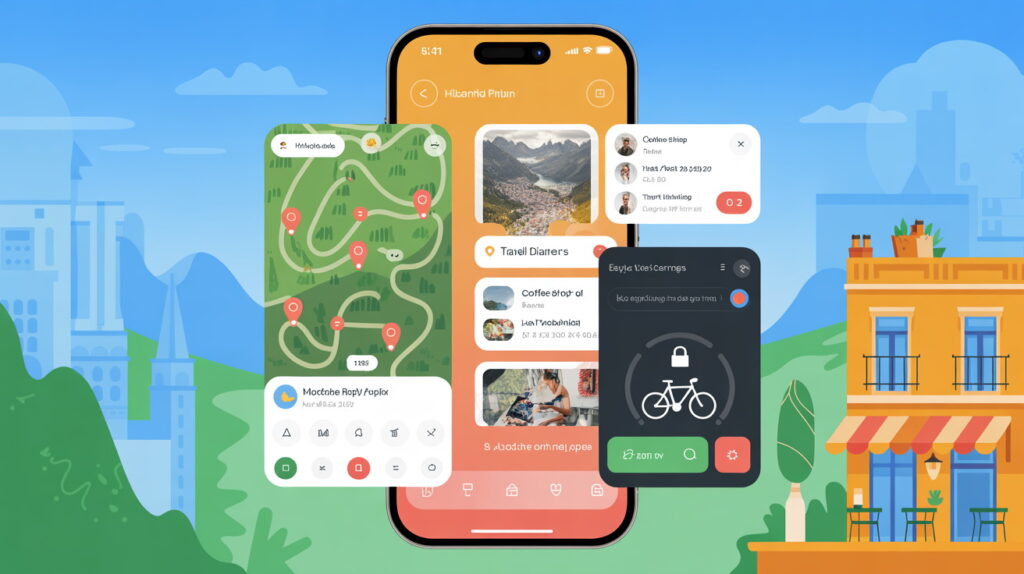
Once you’ve covered the essentials, a few extra apps can make your Europe trip even more enjoyable. These aren’t strictly necessary, but they’re fantastic if you care about good coffee, scenic hikes, detailed travel diaries or exploring a city by bike or scooter.
32. Polarsteps – Automatic Travel Diary
Polarsteps tracks your route automatically and lets you add photos, notes and highlights along the way. At the end of your trip, you’ll have a beautiful visual diary that you can share with friends or even turn into a printed book.
- Record your route and stops across multiple European countries.
- Add photos and short stories for each city or highlight.
- Keep your trip memories organized without posting everything on social media.
It’s a great alternative if you want a travel log without the pressure of daily Instagram posts.
33. Komoot – Hiking & Cycling Routes
If you love the outdoors, Komoot helps you plan hikes and bike rides with detailed maps, elevation profiles and community-recommended routes. It’s especially useful in alpine regions, coastal areas and national parks.
- Discover ready-made hiking and cycling routes with difficulty ratings.
- Download routes for offline navigation on trails and country roads.
- See elevation profiles so you know exactly how challenging a route will be.
Komoot is perfect for adding nature days to an otherwise city-heavy itinerary.
34. Specialty Coffee & Café Finder Apps
Coffee lovers will appreciate apps and websites that highlight specialty cafés in major European cities. These tools can guide you to independent roasters and cozy spots that are perfect for remote work or quiet breaks between sightseeing.
- Find independent coffee shops away from touristy chains.
- Combine caffeine stops with your sightseeing routes.
- Great for digital nomads who need a reliable place to work for a few hours.
If good coffee is a priority, adding a café finder to your app stack can completely change how you experience each city.
35. Bike & Scooter Sharing Apps
Many European cities have bike and scooter sharing systems that you unlock with an app. Services like Lime, Tier, Bolt and local bike-share apps make it easy to cover short distances without using public transport or taxis.
- Quickly unlock bikes or scooters for short rides across the city.
- Beat traffic and explore neighborhoods beyond the city center.
- Often cheaper and more fun than a taxi for short trips.
Just remember to follow local rules, stick to designated lanes and always park responsibly.
How to Combine These Apps for a Smooth Europe Trip

You don’t need every single app on this list. Instead, think of them as building blocks for your ideal “Europe travel toolkit.” The goal is to cover planning, transport, connectivity, money, communication and safety without cluttering your phone.
Here’s a simple setup you can start with and customize:
- Planning & booking: Skyscanner or Google Flights + Booking.com/Hotels.com + TripIt or Wanderlog.
- Connectivity: One eSIM app (Holafly, Airalo or Saily) + a reliable VPN.
- Getting around: Google Maps + Maps.me + Omio or Trainline + local transit apps.
- Money: Wise or Revolut/N26 + a currency converter + Splitwise for group trips.
- Language & activities: Google Translate + one language app + a tour app (GetYourGuide or Viator).
- Food & safety: Google Maps for restaurants + Too Good To Go or HappyCow if you need them + emergency/SOS app + cloud backups.
Before your flight, create a folder on your phone called something like “Europe Trip” and add your chosen apps there. Log in, set up payment methods and download offline content (maps, languages, tickets) in advance so everything works even if airport Wi-Fi is flaky.
Final Thoughts

The best travel apps for Europe are the ones that quietly remove stress in the background: they help you find good deals, keep your plans organized, stay online, move around easily and avoid unpleasant surprises with money or safety. Once those basics are handled, you’re free to focus on what really matters — enjoying new cities, foods, landscapes and people.
Start with a small, focused set of apps for planning, transport, internet, money, language and safety, then add a few extras that match your style, whether that’s hiking, coffee, nightlife or remote work. With the right setup, your phone becomes less of a distraction and more of a smart assistant that keeps your entire Europe trip running smoothly.
However you choose to build your toolkit, set everything up before you leave, test it once at home and then enjoy the freedom of knowing that your trip is backed by the best travel apps Europe has to offer.