If you’ve ever tried to budget and quit after a week or two, you’re not bad with money—you were probably using a system that didn’t fit real life. For beginners, budgeting often feels confusing, restrictive, or emotionally draining because most advice skips the basics and jumps straight to complexity.
This guide is designed specifically for beginners. You’ll learn what a beginner budget should actually look like, how to set one up step by step, and how to avoid the most common mistakes that cause people to give up. The goal isn’t perfection—it’s building a system you can stick to.
If you want the full overview of budgeting strategies for every situation, you can also explore the main guide here: Budgeting Tips (complete guide).
What a Beginner Budget Really Looks Like
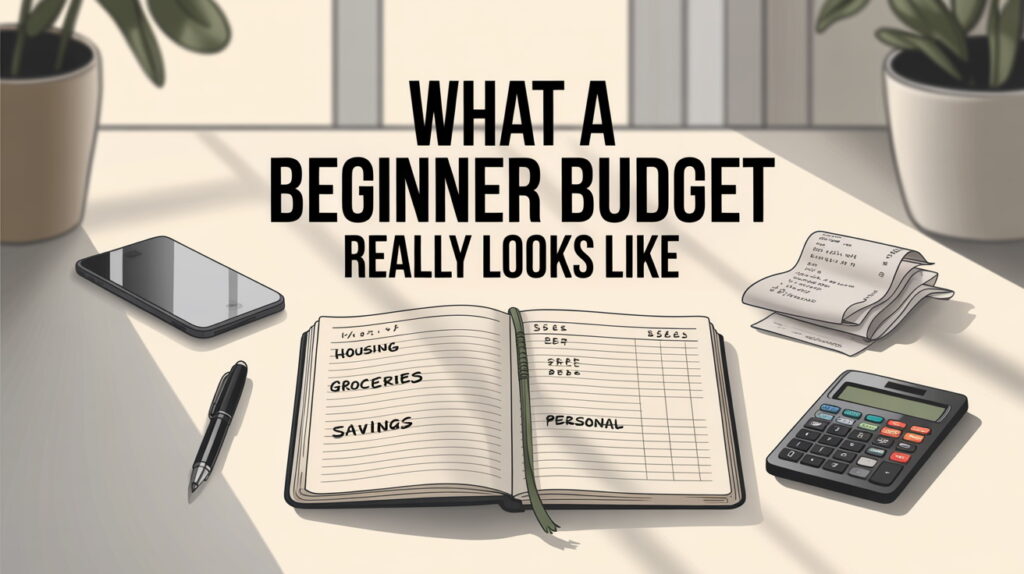
A beginner budget should be simple, flexible, and forgiving. Many people assume budgeting means tracking every transaction or cutting out everything enjoyable, but that approach usually leads to burnout.
Instead, a beginner-friendly budget focuses on clarity over control. It answers just a few important questions:
- How much money do I bring in each month?
- What bills must be paid no matter what?
- How much can I spend on daily life without stress?
- Am I leaving room for mistakes and surprises?
Your first budget is not a final product—it’s a draft. Expect to adjust categories, move money around, and learn as you go. That’s not failure; that’s how budgeting works.
Step-by-Step Beginner Budget Setup
You can set up a beginner budget in under 30 minutes. Follow these steps and resist the urge to overcomplicate anything.
1) Know your numbers
Start with your monthly take-home income—the amount that actually lands in your account after taxes. If your income varies, use a conservative estimate based on your lowest typical month.
Next, list your fixed bills:
- Rent or mortgage
- Utilities
- Phone and internet
- Insurance
- Subscriptions you rely on
This gives you a clear baseline before you think about discretionary spending.
2) Pick one budgeting method
Beginners often fail because they try multiple budgeting methods at once. Choose one simple approach and stick with it for at least a month.
- Simple category budgeting: fixed bills, essentials, personal spending, savings
- 50/30/20 (flexible): good structure without micromanaging
- Zero-based budgeting: better if you want tight control, but optional for beginners
If you’re unsure, start with simple category budgeting—it’s the easiest to maintain.
3) Build your first draft budget
Create categories that reflect how you actually live. A good beginner setup usually includes:
- Housing
- Utilities
- Groceries
- Transportation
- Personal spending
- Savings
- Buffer / miscellaneous
Don’t worry about getting the numbers exactly right. The goal is awareness, not precision.
Beginner Budgeting Tips That Actually Work
Once your budget exists, success depends on habits—not math. These beginner budgeting tips make the biggest difference:
- Start imperfect: waiting for the “perfect” budget delays progress.
- Automate the basics: bills and savings should run automatically.
- Check weekly: 10 minutes once a week prevents surprises.
- Plan for fun: removing all enjoyment almost guarantees failure.
- Use a buffer: one flexible category absorbs mistakes.
Consistency matters more than discipline. A simple budget used every week will outperform a complex system you avoid.
Beginner Mistakes to Avoid
Most beginner budgeting problems come from the same predictable mistakes:
- Creating too many categories
- Forgetting irregular expenses like gifts or annual bills
- Expecting instant results
- Never reviewing the budget after setting it up
- Treating adjustments as failure
Budgeting is a skill. Like any skill, it improves with practice and reflection.
Tools for Beginner Budgeting
The best budgeting tool is the one you’ll actually use consistently. Beginners usually succeed with one of these options:
- Budgeting apps — quick setup, automation, and alerts
- Excel spreadsheets — full control and customization
- Notion dashboards — clean visual planning
You can always change tools later. What matters most is building the habit first.
Free Download: Beginner Budget Template (simple categories + weekly check-in).
Once you’ve used your beginner budget for 30 days, you’ll have enough data to improve it confidently. From there, budgeting becomes less about stress and more about choice.
Next, explore the full system here: Budgeting Tips (main guide).
Frequently Asked Questions
How do beginners start budgeting?
Beginners should start with a simple budget: calculate take-home income, list fixed bills, create 3–5 spending categories, add a small buffer category, and review the budget weekly.
What is the easiest budgeting method for beginners?
The easiest method is simple category budgeting. It separates fixed bills, essential spending, savings, and personal spending without requiring detailed tracking.
How many budget categories should a beginner have?
Most beginners do best with 6–10 categories. Too many categories make budgeting harder to maintain and increase the chance of giving up.
Should beginners use budgeting apps or spreadsheets?
Beginners should use the tool they will stick with. Budgeting apps are faster to set up, while spreadsheets offer more control. Either option works if used consistently.
Why do beginner budgets usually fail?
Beginner budgets often fail because they are too strict, have too many categories, or are never reviewed. Adding flexibility and doing weekly check-ins makes budgets sustainable.